

Estate Planning
Everyone needs an Estate Plan regardless of the size of their estate. We work with everyone from single individuals to families with young children to same-sex marriages to retirees and so on.
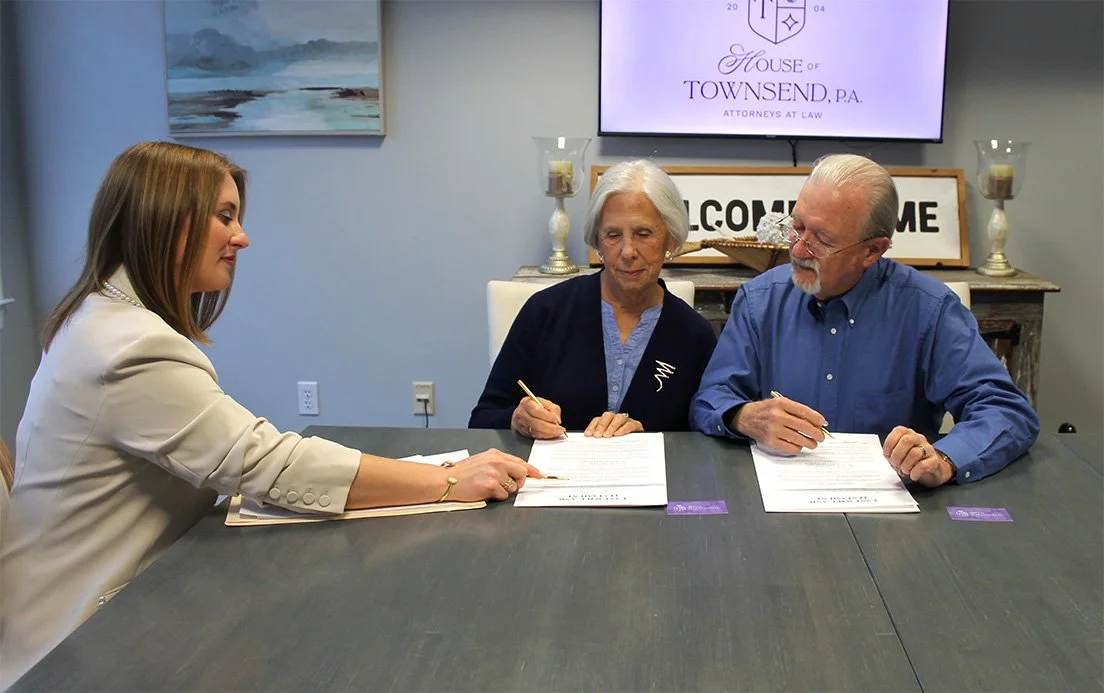
Wills
Regardless of your age or the size of your estate, everyone needs a Will. Wills direct how you would like your assets distributed after you pass. Wills appoint the person you trust (Executor/Executrix) to execute the directions in your Will. They can also express your wishes as to whom would act as guardians of your minor children if you were to pass away.
Revocable Trusts
A Revocable Trust allows you to name the person who will manage your estate (the Trustee) both while you’re alive and after your death. The Trustee carries out the terms of the Trust as you have defined. You can be the initial Trustee of your Revocable Trust. These types of Trusts are commonly used for probate avoidance. They can also be used to create permanent estate plans in second marriage situations.
Durable Powers of Attorney
A Durable Power of Attorney is a legal document that authorizes an individual (your Agent) to act on your behalf for financial and legal matters should you become incapacitated. Incapacity can occur at any time for various reasons such as a car accident, illness, or other unexpected circumstances. Without a Durable Power of Attorney someone would have to obtain Court supervised guardianship over you which is time-consuming and costly and takes the control of who is caring for you out of your hands.
Healthcare Powers of Attorney
Including Living Wills and Advance Directives
A Healthcare Power of Attorney, is a legal document that authorizes an individual (your Agent) to act on your behalf for healthcare decisions should you become incapacitated. Our Healthcare Power of Attorney also includes a Living Will/Advance Directive which provides for end of life decisions. Without a Healthcare Power of Attorney, if you fall into a coma, become mentally impaired or are otherwise unable to make medical decisions then Delaware state law mandates who will decide for you.
“Words cannot express how thankful I am for my experience with estate planning at House of Townsend, P.A. Veronica and her staff are a wonderful combination of welcoming and professional. The process of planning my estate went seamlessly from start to finish. All of my questions were answered expertly and thoroughly. Everything was completely explained during the process. If I could, I would rate them a 10!
From our clients
– Doni, Client
Take the first step:
If you're interested in estate planning services, please complete the form with a few details about your needs. We'll review your message and respond shortly.
Frequently Asked Questions
Have you ever wondered who will pay your bills and make financial arrangements on your behalf if you lose the mental and physical capacity to do so? If so, then you should read on about the Durable Power of Attorney (DPOA) planning document.
-
A general durable power of attorney is a document that is used to designate an individual to act on your behalf in case you become incapacitated. This individual is known as your “Agent” and is the person who will step into your shoes to manage your affairs should you become incapacitated.
-
QYou may choose whether your DPOA is effective now or sometime in the future (upon your incapacity).
You should only appoint individuals you absolutely trust as your Agent. -
You may choose whether your DPOA is effective now or sometime in the future (upon your incapacity).
You should only appoint individuals you absolutely trust as your Agent. -
The answer is a resounding “Yes”. None of us can predict the future and anyone could be involved in a serious accident resulting in their temporary or permanent incapacity. It is important for both your welfare and your family’s welfare to have a plan in place now before it is too late.
-
A DPOA is valid unless it is revoked. With that said, we recommend that everyone re-execute their DPOA every three to five years. Financial institutions are becoming increasingly strict in their standards and regulations, so executing a DPOA every three to five years prevents banks and other financial institutions from refusing to enforce your document because it is “stale”.
-
If you do not have a DPOA, your family may run into some difficulty managing your financial affairs. For instance, if you are married and hold the title to your home as “tenants by the entirety”, your spouse would be unable to obtain a home equity line of credit if one was needed upon your incapacity to pay medical bills or other expenses. While many financial institutions are friendly towards spouses acting as surrogates, this is not always the case. If you are unmarried, it becomes increasingly difficult for your family or friends to step-in, on your behalf, to take care of your finances.
If you do not have a valid DPOA in place, your spouse, adult child, family member or friend will have to petition the Court to obtain something known as “Guardianship” over your property. This frequently involves thousands of dollars in court fees and attorney’s fees, and most important, takes time, something you may not have.
Taking the time to think about the future and plan for your possible incapacity will help you sleep soundly at night. Moreover, preparedness is one of the most generous things we can do for our loved ones.
For more information about durable powers of attorneys, contact us at at 302-539-1388, or via our contact form.